
Customer Svc: 855-620-2330 -
M-Sat -9am-6pm
Speak To Customer Service - 855-620-2330 - M-Sat 9:00am - 6:00pm MST
Customer Svc: 855-620-2330 -
M-Sat -9am-6pm
Speak To Customer Service - 855-620-2330 - M-Sat 9:00am - 6:00pm MST

Last Updated: October 7, 2026
A launch monitor is a device that captures detailed data about your golf swing and ball flight using either camera-based or radar technology. Understanding how these systems work is essential when comparing options like Foresight Sports vs TrackMan launch monitors, since the measurement method directly affects accuracy, setup requirements, and the types of data you receive.
The core difference between launch monitor technologies determines what information you'll get and how reliable it is in different environments. Camera-based systems use high-speed imaging to track ball and club movement, while Doppler radar systems measure velocity and direction.
Camera-based launch monitors like the Foresight Falcon capture ball flight through infrared and photometric measurement, tracking the ball's position frame-by-frame at extremely high speeds.
Doppler radar systems, including TrackMan's technology, emit radio waves that bounce off the moving golf ball and club. The radar measures the velocity shift in returning signals to calculate ball flight characteristics.
The practical difference matters significantly. Camera systems require a clear line of sight and perform best indoors where lighting is controlled. Radar systems work in sunlight and outdoors without degradation, making them ideal for range use and outdoor fitting.
When evaluating Foresight Sports vs TrackMan launch monitors, it's important to recognize that TrackMan dominates the professional and commercial space, while Foresight has built a strong reputation in premium home simulators and club fitting. TrackMan's radar-based approach powers everything from PGA Tour events to high-end golf academies.
The competitive landscape reveals that no single system is best for everyone. TrackMan excels at outdoor range use and full-flight tracking. Foresight dominates in home simulator environments where space is limited and indoor accuracy matters most. Your decision should depend on your primary use case: practice indoors, outdoor range work, or a combination of both.
The TrackMan iO and Foresight Falcon represent the current generation of premium launch monitors, each designed for serious golfers and instructors. But the two brands don't compete model-for-model, they compete across different tiers, and understanding where each product sits in its own lineup is what actually helps you buy.
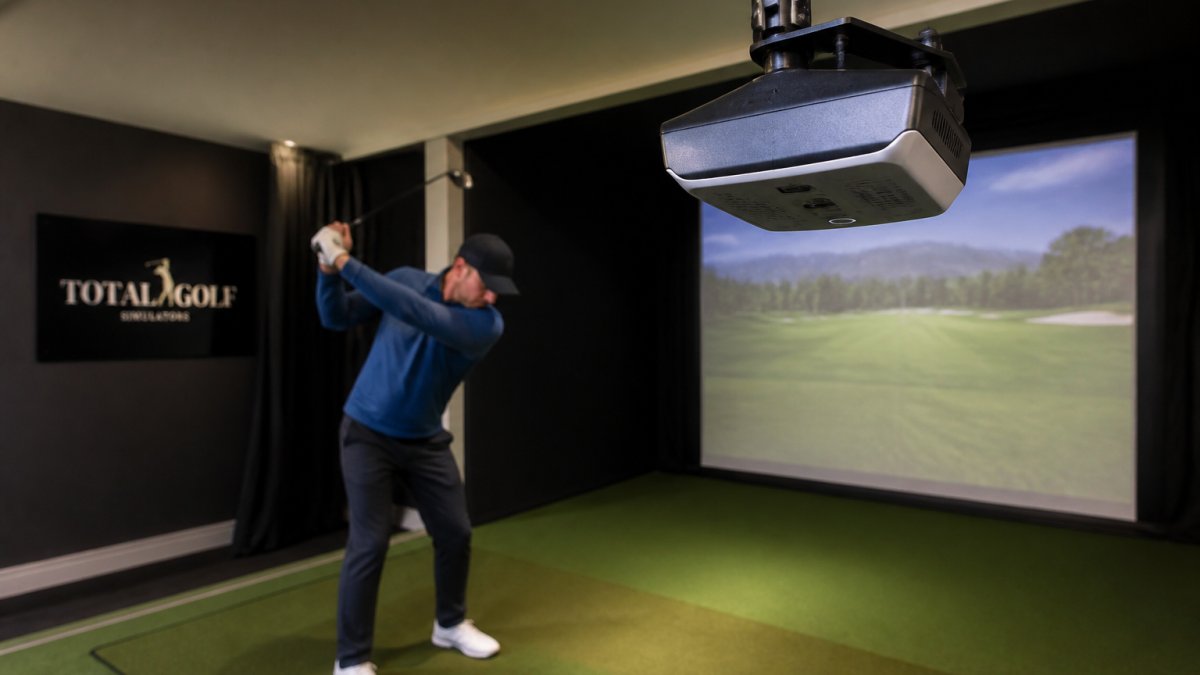
Foresight Sports sells three current camera-based systems that share the same photometric measurement core but differ in portability and mounting:
TrackMan's current lineup is organized differently:
This is the distinction that separates a marketing spec sheet from a buying decision.
Camera-based systems like the GCQuad and Falcon capture high-speed images of the club and ball at impact. That means clubhead speed, ball speed, launch angle, spin rate, clubface angle, club path, angle of attack, and strike location on the face are all measured directly from the images.
Radar-based systems like the TrackMan 4 and iO measure the Doppler shift of the ball and club in flight. Ball speed, launch angle, and full trajectory are measured directly.
The Falcon and iO are both built for indoor installation, but they solve the indoor problem differently. The Falcon's overhead camera has a clear, short sight line to the ball and club, so it doesn't need the ball to travel far to gather data.
Outdoors, the picture flips. The TrackMan 4 is the system you'll see at tour events and outdoor fitting days because radar tracks the entire ball flight, carry, apex, descent angle, and landing, without needing a camera to keep the ball in frame for hundreds of yards.
None of these is universally "better." The right answer is the tier that matches where you'll actually hit balls.
Launch monitor accuracy varies dramatically between indoor and outdoor environments, and this is one of the most important factors when choosing between Foresight Sports vs TrackMan launch monitors.
Indoor launch monitors operate in a constrained environment where the ball travels only 10-20 feet before hitting a screen or net.
Outdoor launch monitors track the actual ball flight from impact to landing. TrackMan's radar can follow the ball for hundreds of yards, measuring every yard of carry distance and accounting for wind, elevation, and actual landing position.
For home simulators, limited ball flight is not a limitation, it's expected. The Foresight Falcon's indoor accuracy is excellent because the system doesn't need to track beyond the screen.
Shot dispersion, how consistently your shots group together, is measured differently by each system. Camera-based systems show dispersion based on measured impact data. Radar systems show actual landing positions outdoors or projected dispersion indoors.
Strike location consistency is a Foresight Falcon advantage. The system shows you exactly where on the clubface each shot made contact.
TrackMan provides shot grouping data showing how tightly your shots cluster. This is useful for assessing consistency, but it doesn't tell you where on the clubface the ball made contact.
Choosing the right launch monitor for a home golf simulator depends on your space, budget, and primary use. Most home golfers benefit more from the Foresight Falcon's indoor accuracy and compact design than from TrackMan iO's outdoor capabilities. Understanding the underlying physics of ball flight data remains essential for any player seeking to master launch monitor accuracy as they refine their swing mechanics.
Home simulator space is often the limiting factor. If your ceiling is under 9 feet, overhead-mounted systems become difficult. The Foresight Falcon works in spaces as tight as 8 feet overhead.
Dedicated space versus multipurpose rooms also matters. If your simulator space needs to serve other functions, a portable or easily removable system is preferable.
Consider the hitting mat and enclosure you'll need. A quality hitting mat, impact screen, and enclosure add significantly to your total setup. At Total Golf Simulators, we help customers choose systems that work within their actual space constraints, not theoretical ideals.
Launch monitors are just one component of a complete simulator. The software you run on the launch monitor data determines your experience. Both Foresight and TrackMan offer multiple software options, each with subscription costs.
Foresight Falcon integrates with several simulator platforms, giving you flexibility in choosing software that matches your preferences. TrackMan offers its own premium software and integrates with selected third-party platforms.
Long-term ownership costs include potential repairs, software updates, and eventual upgrades. Neither system is inexpensive, so understanding the total cost of ownership over 5-10 years matters.
Both the Foresight Falcon and TrackMan iO are reliable systems used by professionals worldwide. The Falcon powers numerous indoor golf facilities and high-end home simulators.
Reliability differences are minimal between current-generation systems. Both require proper installation and occasional calibration checks. The Foresight Falcon's camera technology is slightly more sensitive to environmental changes like lighting shifts, but this is manageable in home environments.
Real-world feedback from users shows both systems deliver on their promises. Indoor accuracy with the Foresight Falcon is excellent for simulator play. Outdoor accuracy with TrackMan iO is unmatched for range work.
The biggest mistake golfers make is choosing a launch monitor without considering their actual use case. A golfer planning 90% indoor simulator play shouldn't prioritize outdoor performance.
Another common error is underestimating space requirements. Many home conversions fail because the launch monitor needs more clearance than the space provides.
Overlooking software costs is another frequent oversight. The launch monitor hardware is just the beginning.
Finally, many buyers ignore strike location and impact data when choosing between systems.
Choosing between Foresight Sports vs TrackMan launch monitors requires matching the system to your space, use case, and improvement goals.
TrackMan uses Doppler radar to track ball flight and clubhead data, while Foresight Sports (Falcon and GCQuad models) uses high-speed camera technology with infrared capture. TrackMan excels at outdoor tracking and measures ball flight with minimal lag. Foresight cameras capture more detailed club data at impact, including face angle and club path, making them strong for indoor simulators. Both measure clubhead speed, ball speed, launch angle, and spin rate, but the underlying technology affects accuracy indoors versus outdoors and influences setup space requirements.
For home simulators, Foresight often has the advantage. Camera-based systems work well indoors with limited ceiling height and provide excellent data consistency for shot analysis and coaching. Foresight's Falcon and GCQuad models deliver reliable measured data and derived data on clubface orientation and strike location, which are valuable for instruction. TrackMan iO is portable and accurate but performs best outdoors or in larger spaces. Your choice depends on ceiling height, available space, and whether you prioritize indoor accuracy or outdoor versatility.
Both systems serve coaching well, but they excel in different contexts. Foresight launch monitors provide detailed impact measurement data, including heel and toe strike information and clubface orientation, making them ideal for indoor coaching facilities where you need consistent, repeatable feedback. TrackMan is preferred for outdoor coaching and range work because of superior ball flight tracking and real-time feedback. For a dedicated indoor instruction facility, Foresight typically offers better value and more reliable data consistency across multiple shots.
Measure your ceiling height, available floor space, and whether you need portability. Foresight systems require overhead installation space (typically 7-9 feet) but are compact horizontally. TrackMan iO is portable and works in tighter spaces but needs clear sightlines. Consider long-term costs including software subscriptions, calibration requirements, and alignment setup time. If you have a 10-foot basement ceiling and want a permanent setup, Foresight is practical. If you need flexibility or outdoor use, TrackMan iO offers more versatility. Test both systems if possible before committing to ensure the measured data and real-time feedback match your expectations.