
Customer Svc: 855-620-2330 -
M-Sat -9am-6pm
Speak To Customer Service - 855-620-2330 - M-Sat 9:00am - 6:00pm MST
Customer Svc: 855-620-2330 -
M-Sat -9am-6pm
Speak To Customer Service - 855-620-2330 - M-Sat 9:00am - 6:00pm MST

Last Updated: November 16, 2026
Quick Summary
The best golf simulator flooring for spare rooms is a layered system: interlocking foam tiles as a protective base with turf on top for ball roll, plus a hitting mat in the stance area. Foam tiles protect finished hardwood or laminate, while turf provides the green surface and putting roll.
Most golf simulator flooring guides assume you are building in a garage or basement where the floor is concrete and nobody cares what it looks like. A spare room is different. You are working on top of finished hardwood or laminate, the ceiling is probably lower, and the room still needs to function as a guest room, office, or den when the session ends.
That changes the brief for the best golf simulator flooring for spare rooms. You need a surface that protects what is underneath, deadens the thud of a mishit iron, and comes up without wrecking the floor. The honest answer is that the right golf simulator flooring is a layered system, not a single product.
Start with a tape measure, not a shopping cart. Record ceiling height at the highest and lowest point, the room's width and depth wall to wall, and the distance from your planned ball position to the impact screen. Note door swings, closet doors, and any floor vents or radiators.
A common mistake is ordering floor coverage for the whole room when you only need coverage under and around the hitting zone. Flooring is sold in packs and rolls with fixed dimensions, so a few inches of miscalculation can mean buying an extra pack. Measure twice, sketch the layout on paper, then buy.
The fastest way to choose is to understand what each material actually does. Foam tiles cushion and level the floor. Turf provides the green surface and putting roll. A hitting mat absorbs club impact and protects your joints. Most spare-room builds use two or three of these together.
| Material | Primary Job | Typical Placement | Best For | Watch Out For |
|---|---|---|---|---|
| Interlocking foam tiles | Cushioning, subfloor base | Full floor or hitting zone | Hardwood and laminate protection | Can shift without edging |
| Artificial turf | Green surface, putting roll | Over foam or bare floor | Finished look, ball roll | Thin turf feels firm underfoot |
| Hitting mat or strip | Club impact absorption | Inside the stance area | Joint comfort, durability | Replacing worn strips |
| Landing pad | Catching low shots | Behind the screen | Ball containment | Adds floor thickness |
| Carpet tiles | Wall and ceiling finish | Walls, ceiling | Acoustic softening | Not a floor base alone |
Foam tiles offer protection. Turf offers realism. Hitting mats offer durability. If your budget only stretches to one purchase now, buy the hitting mat first and add the base layer later.
For a closer look at the foam option, you can shop Carl's Place golf room floor tiles, which come in packs of five covering 59 square feet each.
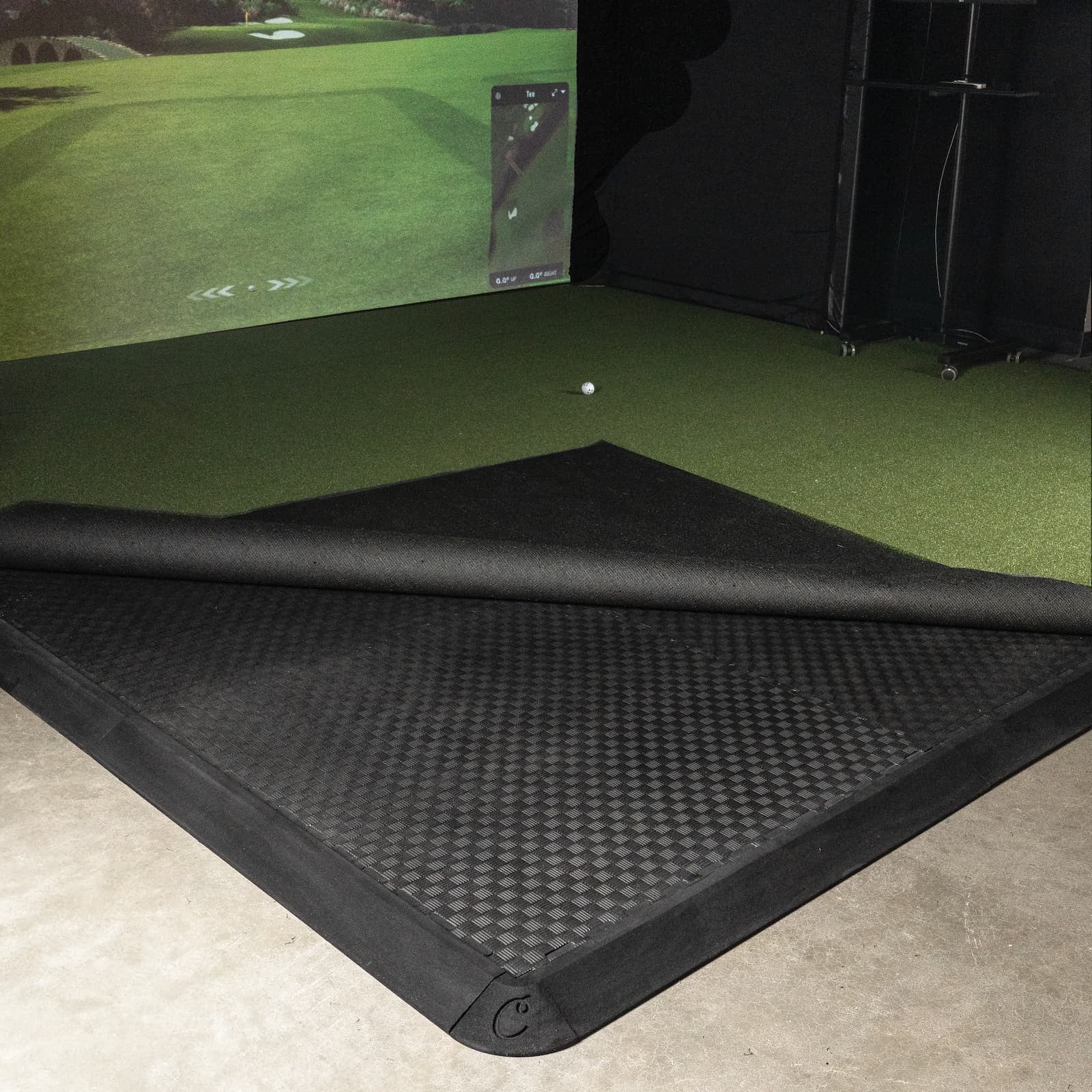
Protecting a finished floor comes down to three rules: never let a club touch it, never let a ball bounce on it, and never trap moisture against it.
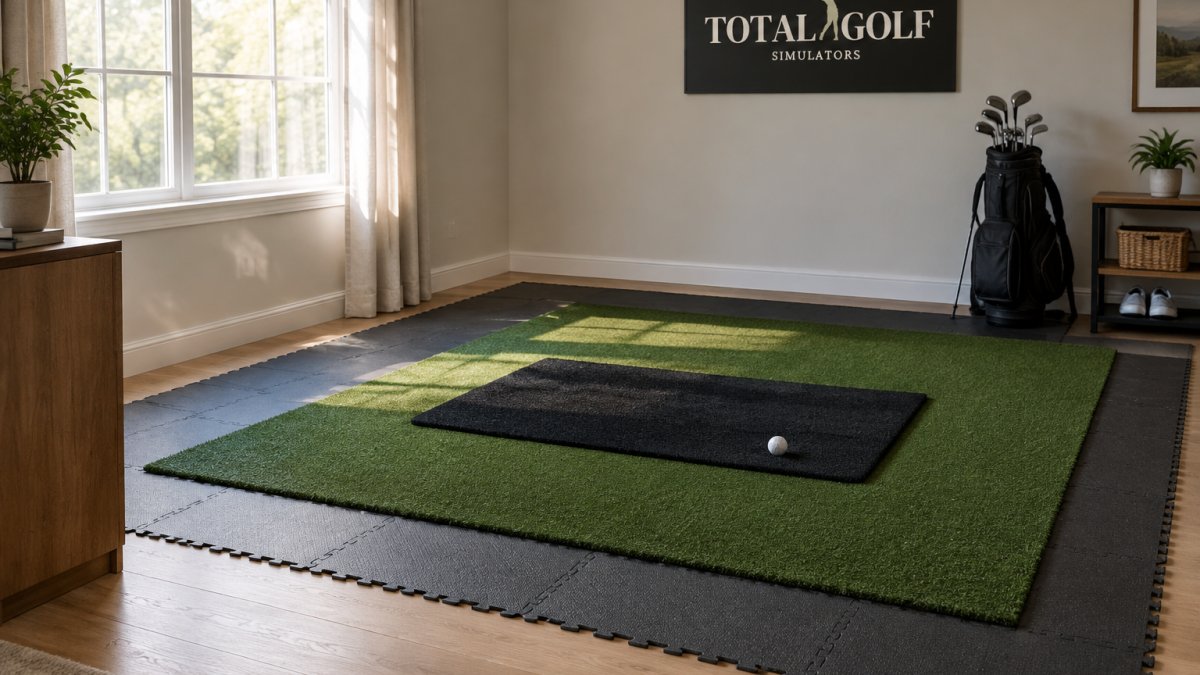
Here are the combinations we recommend most often:
The one thing we would avoid is laying turf directly on hardwood with nothing underneath. It slides, it traps dust, and it offers no cushioning when you catch a shot heavy.
Golf simulator turf flooring is the surface layer that gives your room its green, course-like appearance and lets putts roll true. It is the piece that makes a spare room look like a simulator instead of a gym.
Turf does three jobs well. It creates a consistent, level surface for ball roll. It hides the seams and edges of the foam base underneath. And it makes the room feel intentional rather than improvised.
Where turf falls short is cushioning. Most simulator turf is thin, so standing on it for an hour feels about the same as standing on the floor beneath it. It also does not absorb club impact, which is why you still need a hitting mat or strip in the stance area. Turf is the finish, not the foundation. Since turf is only the finish, comparing GH Artificial Turf options can help you choose a surface that suits the room without mistaking it for cushioning.
If you want a large-format turf that covers the floor inside or around an enclosure, you can view the artificial turf flooring mat, which is available in two sizes.
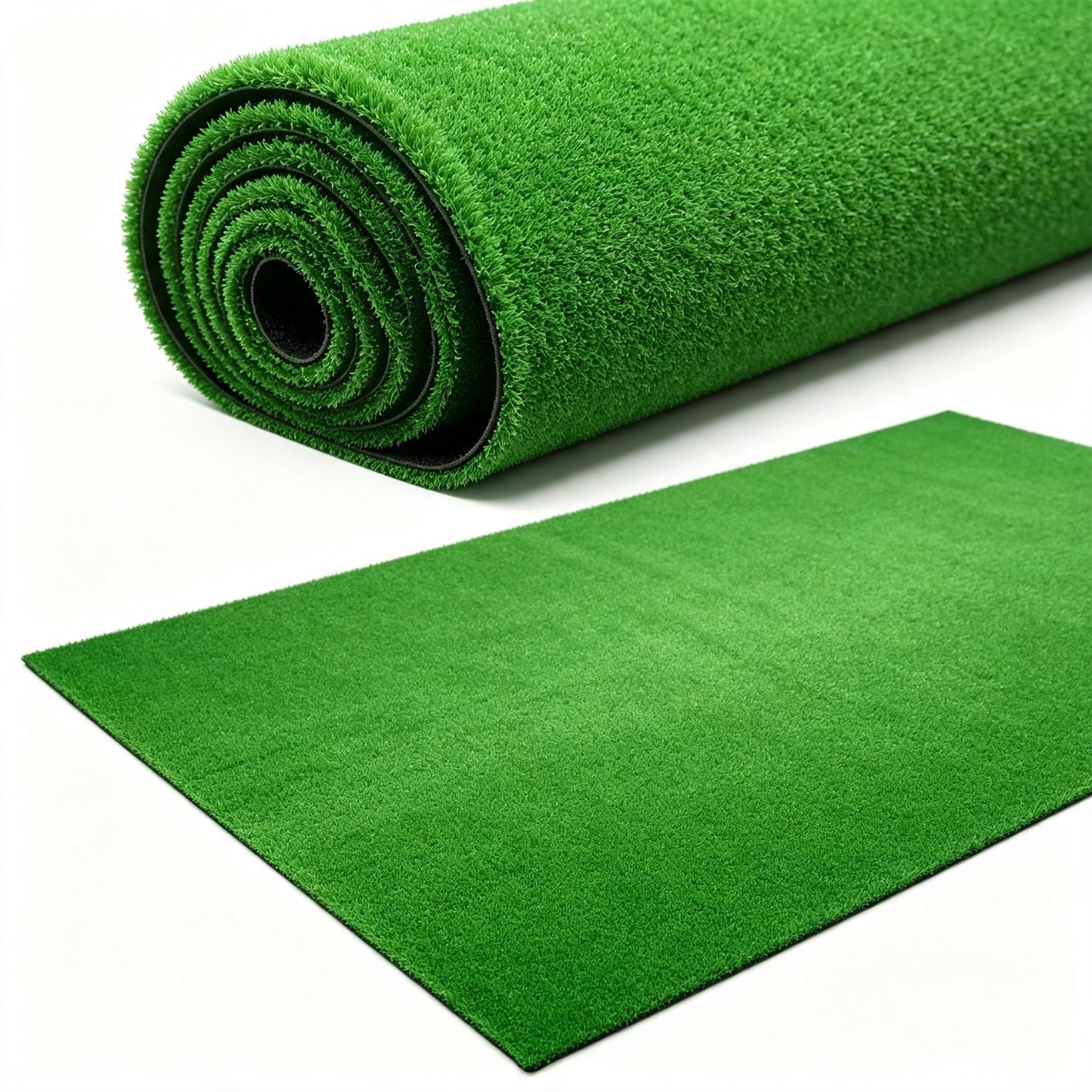
A DIY golf simulator flooring build is entirely doable in a weekend, and doing it yourself is where you save the most money. The sequence matters more than the products.
A common mistake is skipping the edging to save money. Without it, tiles can creep apart under foot traffic and the turf edge can curl.
A golf simulator hitting mat is the single most important purchase for comfort and longevity. It is the surface you stand on and strike down into, hundreds of times per session. Lower-quality mats can transfer more shock into your wrists and elbows and may wear through in the strike zone over time.
Look for three things: a thick, shock-absorbing base, a replaceable hitting strip, and enough width to stand comfortably. A mat that is too narrow forces you to stand half off it, which changes your swing plane.
For a deeper look at the options, our guide to shock absorbing golf mats for indoor simulators breaks down the differences in construction and feel.
If you want a complete training surface rather than a standalone mat, the Net Return Platinum Turf is a four-piece modular system with a rubber base, multiple hitting zones, and an integrated putting lane. For an enclosure-matched look, Big Moss landing turf is sized to fit specific DIY enclosure kits and doubles as a putting green.
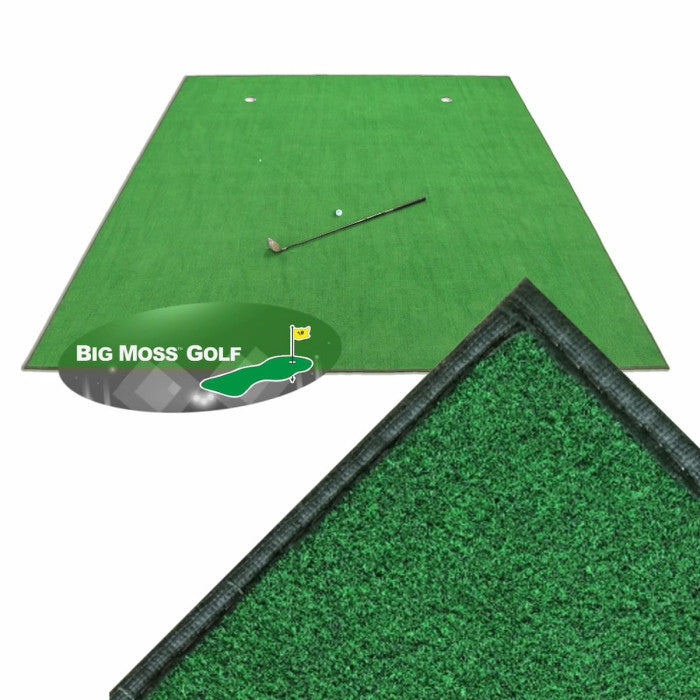
Noise and moisture are the two issues that turn a great simulator into a household argument. Both are solvable, but the fix depends on what is under your feet and how sound and vapor actually travel through the assembly.
Concrete subfloor. The most forgiving option structurally. Concrete is stable and level, but it transmits impact noise upward and feels cold. Foam tiles over concrete solve both problems.
Hardwood subfloor. Beautiful and fragile. Use foam tiles as a barrier, never lay turf directly on the wood, and check the finish underneath every few months for scuffing.
Laminate subfloor. Similar to hardwood but more prone to edge swelling if moisture gets in. A foam base keeps spills and humidity away from the seams.
Carpet. Soft but unstable. Foam tiles over carpet compress unevenly, so consider removing the carpet or laying a rigid board first.
Basement or slab-on-grade floors. These are the highest-risk rooms for moisture. Concrete wicks vapor from below, and a foam tile traps it against the slab. Controlling humidity with a vapor barrier and a dehumidifier can help in these rooms.
On noise: a hitting mat with a rubber base cuts impact sound dramatically, and carpet tiles on the walls and ceiling absorb the rest.
For concrete floors specifically, our step-by-step guide to stabilizing hitting mats on concrete covers anchoring and leveling in detail.
The right answer depends on how the room gets used when you are not swinging a club. Here is how we would decide.
Dedicated simulator room. Go all in: foam base, turf over the top, a premium hitting mat, and carpet tiles on the walls. You are not pulling this up, so optimize for feel and looks.
Multi-use guest room. Choose removable flooring. Foam tiles with turf on top lift in sections in minutes. A standalone hitting mat that slides into a closet makes the room a bedroom again by evening.
Home office with a simulator. Keep coverage to the hitting zone only. A mat plus a turf strip protects the floor without swallowing the room.
Low ceiling. Flooring thickness matters here. Thick foam plus thick turf can eat an inch of your swing clearance, so measure your total floor stack before you order.
If you are still planning the broader build, our guide to building a home golf simulator covers space planning and setup before you commit to flooring.
The hardest part of a spare-room build is not picking a material.
It depends on how the room gets used. A cushioned foam subfloor topped with turf gives the most realistic, finished look and absorbs ball impact well. If the room needs to switch back to a bedroom or office, interlocking foam tiles and a rollable turf mat are easier to pull up than glued-down carpet. For tight budgets, a quality hitting mat over the existing floor covers the basics without a full build.
Yes, in most cases. Turf and foam tiles create the surface and cushioning, but a dedicated golf simulator hitting mat gives you a stable, consistent lie where the club actually strikes. Look for a mat with a replaceable hitting strip so the wear zone can be swapped out instead of replacing the whole mat. Placing it over the turf also keeps the ball from skidding on a firm surface.
Start with a cushioned layer. Interlocking foam tiles cover 59 sq. ft. per pack and form a subfloor that spreads impact and keeps the floor beneath dry. Add turf on top for a clean finish, and use tapered edge pieces so the transition does not become a trip hazard. If the room has hardwood or laminate, a removable tile-and-turf layer is easier to lift than an adhesive installation.
Foam tiles are lighter, easier to cut and install, and cheaper per square foot, which suits spare rooms that need to stay multi-use. Rubber holds up better under heavy, repeated impact and tends to deaden sound more, but it costs more and is harder to remove. For most home spare-room builds, foam tiles plus a quality hitting mat cover the cushioning and impact needs without a permanent installation.
